Most Equipment Downtime Doesn't Begin With Equipment Failure
It begins with information failure.
A technician notices unusual vibration during an inspection.
An operator hears a strange noise from a motor.
A recurring issue appears in maintenance records.
A temperature reading starts trending upward.
The warning signs are often there.
The problem is that they remain disconnected.
By the time equipment fails, organizations are frequently reacting to a problem that was visible weeks—or even months—earlier.
This is why maintenance strategies are changing across manufacturing facilities, utilities, healthcare organizations, logistics operations, and commercial facilities.
The conversation is no longer simply about repairing equipment.
It’s about identifying risks early enough to prevent failure altogether.
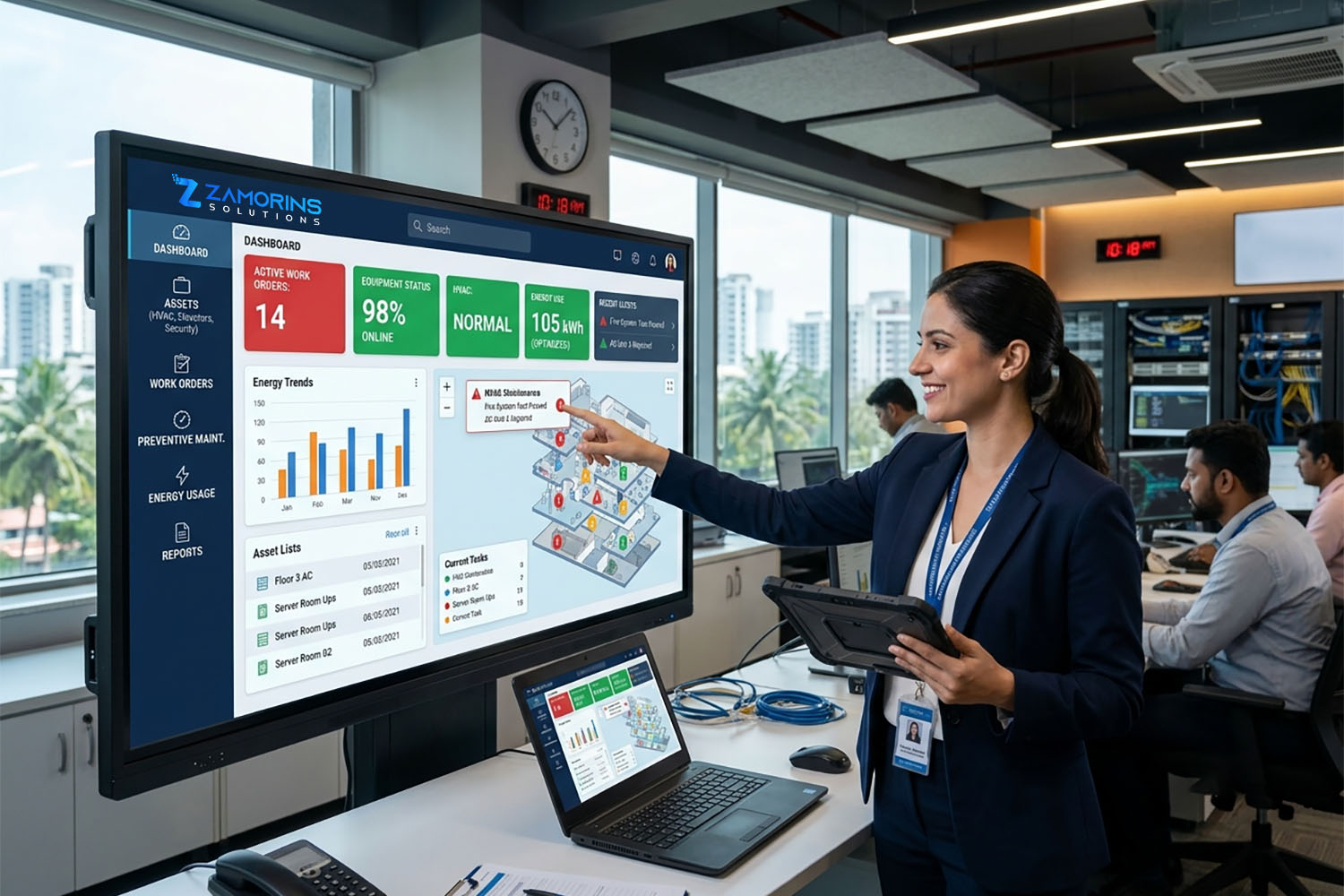
That shift is driving the adoption of predictive maintenance software, digital inspections, automated work order software, and connected asset management systems.
Because reducing equipment downtime isn’t just a maintenance objective.
It’s an operational necessity.
Why Equipment Downtime Remains a Major Operational Challenge
Every organization depends on reliable equipment.
When critical assets fail unexpectedly, the consequences extend far beyond repair costs.
Downtime can impact:
- Production schedules
- Customer commitments
- Employee productivity
- Regulatory compliance
- Revenue generation
- Operational efficiency
The larger the operation, the greater the impact.
For organizations managing hundreds or thousands of assets, even a single unexpected failure can create significant disruption.
Yet many businesses continue relying on reactive maintenance, addressing problems only after equipment breaks down.
While this approach may seem cost-effective initially, the long-term consequences are often far more expensive.
Understanding Reactive Maintenance
Reactive maintenance is a maintenance strategy where repairs occur only after equipment fails.
At first glance, the approach appears simple.
No maintenance planning.
No scheduled inspections.
No proactive servicing.
Equipment is repaired when something goes wrong.
However, the true costs often remain hidden until failure occurs.
Common consequences include:
- Unexpected equipment failures
- Emergency repair expenses
- Production interruptions
- Increased labor costs
- Overtime maintenance work
- Higher spare parts consumption
- Reduced equipment lifespan
- Compliance documentation gaps
The problem isn’t just the breakdown itself.
It’s the disruption created when failure occurs unexpectedly.
The Hidden Cost of Reactive Maintenance
Most organizations measure repair costs.
Far fewer measure the cost of waiting.
Waiting for someone to notice the issue.
Waiting for maintenance approval.
Waiting for replacement parts.
Waiting for technician availability.
Waiting for information to reach the right person.
In many organizations, downtime is not caused by equipment failure alone.
It’s caused by the delay between detection and action.
When maintenance processes rely on spreadsheets, emails, paper forms, and disconnected systems, operational visibility becomes limited.
And limited visibility almost always creates delayed action.
What Is Predictive Maintenance?
Predictive maintenance software helps organizations identify potential failures before they occur.
Instead of relying on fixed maintenance schedules or waiting for breakdowns, maintenance decisions are based on equipment condition, inspection findings, historical trends, and operational data.
This allows maintenance teams to address issues proactively.
Modern predictive maintenance solutions help organizations:
- Detect emerging equipment issues
- Monitor asset condition continuously
- Schedule maintenance proactively
- Reduce unexpected downtime
- Improve maintenance planning
- Increase technician productivity
- Extend equipment lifespan
- Improve compliance performance
Rather than reacting to failures, maintenance becomes a planned and controlled process.
A Common Maintenance Scenario
Consider a manufacturing facility operating 250 production assets.
During a routine inspection, a technician identifies unusual vibration in a conveyor motor.
The finding is documented.
An email is sent.
A maintenance request is created.
The issue remains open.
Production continues.
Three weeks later, the motor fails unexpectedly.
The conveyor stops.
Production is interrupted.
Emergency repairs begin.
Management reviews the incident.
The investigation reveals something important.
The warning signs had already been identified.
The failure wasn’t caused by a lack of inspections.
It was caused by a lack of visibility.
This is exactly where predictive maintenance changes the outcome.
Instead of waiting for equipment failure, organizations can identify risk earlier and act before operations are disrupted.
Why Mobile-First Inspection Apps Matter
Maintenance decisions depend on accurate information.
Unfortunately, many organizations still rely on paper forms and manual reporting processes.
This creates delays between identifying a problem and acting on it.
A mobile inspection app eliminates that delay.
Field technicians can:
- Complete inspections on-site
- Capture photos and videos
- Record asset conditions
- Submit findings instantly
- Scan QR codes for asset history
- Report safety concerns immediately
Instead of waiting for paperwork to be processed, information becomes available in real time.
This enables faster decision-making and earlier intervention.
Digital Inspection Software Creates Earlier Visibility
The effectiveness of predictive maintenance depends on the quality of inspection data.
Modern digital inspection software improves data accuracy while making inspections easier to complete.
Organizations gain:
- Standardized inspection procedures
- Consistent data collection
- Real-time reporting
- Faster issue identification
- Improved inspection accountability
More importantly, digital inspections help organizations identify recurring trends that often precede equipment failures.
The sooner those patterns become visible, the easier they are to address.
Automated Work Orders Reduce Response Delays
Identifying a problem is only the first step.
Many maintenance teams struggle after the issue has already been found.
Inspection findings often become:
- Emails
- Phone calls
- Spreadsheet entries
- Paper requests
Each handoff introduces delay.
This is where automated work order software becomes critical.
When an issue is identified, the system can automatically:
- Generate a maintenance request
- Assign responsible technicians
- Set maintenance priorities
- Notify supervisors
- Track completion progress
- Update maintenance history
- Create compliance records
This significantly reduces the time between detection and action.
Predictive Maintenance vs. Reactive Maintenance
Reactive Maintenance | Predictive Maintenance |
Repairs after failure | Repairs before failure |
High equipment downtime | Reduced downtime |
Emergency maintenance | Planned maintenance |
Higher repair costs | Lower maintenance costs |
Production interruptions | Better operational continuity |
Limited planning | Data-driven scheduling |
Manual tracking | Maintenance automation |
Greater compliance risk | Improved compliance readiness |
The difference is not simply technology.
The difference is visibility.
Why Maintenance Teams Still Struggle
Most maintenance teams work hard.
They perform inspections.
Complete repairs.
Track assets.
Document maintenance activities.
The challenge isn’t effort.
The challenge is visibility.
When inspection records, asset history, maintenance schedules, and work orders live in different systems, organizations struggle to see the patterns that predict failure.
Maintenance becomes reactive because information remains fragmented.
Predictive maintenance becomes possible only when operational data is connected.
This is not an effort problem.
This is a visibility problem.
Enterprise Asset Management Creates Operational Clarity
A modern enterprise asset management platform connects the information maintenance teams need every day.
This includes:
- Asset inventory
- Equipment history
- Inspection records
- Maintenance schedules
- Work orders
- Compliance documentation
- Performance analytics
Instead of searching multiple systems, teams gain a complete operational view.
Better visibility leads to better maintenance decisions.
Improving Compliance Through Connected Maintenance
Maintenance and compliance are closely linked.
Regulators increasingly expect organizations to maintain complete records of:
- Inspections
- Maintenance activities
- Corrective actions
- Asset performance
- Safety checks
Modern compliance management software helps organizations maintain:
- Digital inspection records
- Corrective action tracking
- Audit trails
- Maintenance history
- Audit-ready reporting
This reduces compliance risk while improving operational accountability.
Beyond Predictive Maintenance: Connecting the Entire Workflow
Predicting a problem is valuable.
Acting on it is what prevents downtime.
Many organizations already collect inspection data.
The challenge is ensuring that findings become work orders, work orders become corrective actions, and corrective actions become completed maintenance records.
At Zamorins Solutions, we help organizations connect inspections, asset management, work orders, compliance activities, and maintenance visibility into a single operational workflow.
Because identifying an issue is only the beginning.
Closure is what protects uptime.
Business Benefits of Predictive Maintenance Software
Organizations implementing predictive maintenance software often experience measurable operational improvements.
These include:
- Reduced equipment downtime
- Improved asset reliability
- Lower maintenance costs
- Faster issue resolution
- Better workforce productivity
- Longer equipment lifespan
- Improved compliance readiness
- Stronger operational visibility
- Better maintenance planning
- More informed decision-making
The benefits extend well beyond maintenance.
They improve overall operational performance.
The Future of Maintenance Management
Maintenance is becoming increasingly connected, intelligent, and data-driven.
Organizations are moving away from isolated systems and toward integrated platforms that combine:
- Inspections
- Asset management
- Work orders
- Analytics
- Compliance tracking
- Mobile workforce management
The goal is no longer simply repairing equipment.
The goal is preventing failures before they occur.
Businesses that embrace predictive maintenance today position themselves for greater reliability, lower operating costs, and stronger operational resilience in the years ahead.
Conclusion
Most organizations do not suffer from a maintenance problem.
They suffer from a visibility problem.
Equipment failures rarely appear without warning.
The warning signs often exist in inspections, maintenance records, technician observations, and asset performance data.
The challenge is connecting that information early enough to act.
Predictive maintenance software helps organizations move beyond reactive repairs and calendar-based servicing toward a more proactive maintenance strategy.
When inspections, work orders, asset history, and compliance activities work together, maintenance teams gain the visibility needed to reduce downtime, improve reliability, and make better operational decisions.
The future of maintenance is not simply predicting failure.
It is creating the operational visibility required to prevent it.
Frequently Asked Questions
1. What is predictive maintenance software?
Predictive maintenance software analyzes asset condition, inspection data, maintenance history, and operational trends to identify potential failures before they occur, enabling proactive maintenance planning.
2. How is predictive maintenance different from reactive maintenance?
Reactive maintenance repairs equipment after failure, while predictive maintenance identifies risks early and schedules maintenance before breakdowns occur, reducing downtime and costs.
3. How do mobile inspection apps improve maintenance operations?
A mobile inspection app allows technicians to complete inspections on-site, capture photos, submit reports instantly, and trigger maintenance workflows in real time.
4. What are automated work orders?
Automated work orders are maintenance tasks automatically generated when issues are identified during inspections, helping teams assign, prioritize, and track maintenance activities more effectively.
5. How does predictive maintenance improve compliance?
Predictive maintenance systems maintain digital records of inspections, repairs, corrective actions, and maintenance history, making audits and compliance reporting significantly easier.
6. Which industries benefit most from predictive maintenance software?
Manufacturing, utilities, healthcare, logistics, education, public infrastructure, commercial facilities, and energy sectors all benefit from reduced downtime and improved asset reliability.
7. Why is enterprise asset management important?
Enterprise asset management provides centralized visibility into assets, inspections, maintenance schedules, work orders, and compliance records, supporting better lifecycle management and maintenance planning.
Related Posts
How Real-Time Operations Software Dashboards Help Manufacturing Leaders Make Better Decisions
Better Decisions Don’t Start in the Boardroom. They start on the shop floor. A production…
How Facility Management Software Improves Visibility Across Multi-Location Operations
Discover why multi-location businesses in India struggle with operational visibility and how facility management software…
Why Every Business Needs a Custom Mobile App in the Digital Age
Table of Content What Is a Custom Mobile App? Why Should Businesses Care About Mobile…