



A machine trips at 2 PM. The supervisor scribbles a note, hands it to a technician, and assumes the job is done. By the next morning shift, nobody is sure whether the repair was completed, who did it, or whether a follow-up check was ever scheduled. This single scenario — repeated dozens of times a week across Indian facilities — is not a people problem. It is a process problem, and it is quietly bleeding time, money and compliance readiness from your operations.
The Hidden Cost of a Broken Work Order Process
Most operations leaders are aware that their work order process is imperfect. What they underestimate is the cumulative cost of that imperfection. When work requests move through WhatsApp chats, handwritten registers, phone calls or disconnected spreadsheets, several things go wrong in parallel.
- Jobs get lost or duplicated. Without a single system of record, a request raised in a WhatsApp group can be missed in the scroll, while another team raises the same request a day later.
- Accountability disappears. When a job has no formal owner, due date or status, it is almost impossible to chase it — or to prove it was ever done.
- Supervisors spend hours on follow-up. Walking the floor, calling technicians and cross-referencing registers to build a simple status picture consumes supervisor time that should go into actual operations decisions.
- Audit trails are thin or non-existent. When an internal audit, statutory inspection or ISO review asks for maintenance records, teams scramble to reconstruct history from paper registers and memory.
- Reactive maintenance costs more. Untracked work orders mean preventive tasks slip, small problems grow into major breakdowns, and emergency repair costs spike.
None of these are dramatic, one-time failures. They are steady, low-visibility drains that are very easy to normalise — until an audit exposes them or a breakdown causes a serious disruption.
Why the Problem Persists Even in Well-Run Facilities
Most facility managers and plant leaders are experienced professionals. So why does the work order problem persist?
The honest answer is that informal systems feel fast in the short term. Sending a WhatsApp message to a technician feels faster than logging into a system, filling a form and assigning a job. And for a team of five in a single building, it sometimes is. The trouble begins when the facility grows — more buildings, more equipment, more contractors, more compliance requirements — and the informal system does not scale.
At that point, the team is managing serious operational complexity with tools designed for a much simpler environment. The lag between raising a work request and confirming completion grows. Supervisors become the human middleware, manually bridging the gap between field teams and management. And management loses real-time visibility into what is actually happening on the ground.
Many organisations have tried to solve this with spreadsheets. A shared Google Sheet or an Excel register is a step up from paper, but it introduces its own frustrations: version conflicts, no mobile-friendly field access, no automatic notifications, no way to attach photographs or completion notes, and still no real audit trail.
What a Digital Work Order System Actually Changes
A well-built digital work order system does not just digitise your paper form. It restructures the entire flow — from request to assignment, execution, verification and reporting — in a way that is visible to every stakeholder in real time.
Raising and Assigning Work Orders
Any authorised team member — a floor supervisor, a housekeeping lead, a security officer — can raise a work order from a mobile device in under a minute. They can select the asset or location, describe the issue, attach a photograph and set a priority. The system immediately routes the request to the right technician or contractor team and sends a notification.
Field Execution With Mobile Access
Technicians receive jobs on their mobile phones. They can accept the job, log the time they started, upload photos of the work in progress and mark completion with a note or a checklist. No paper, no register, no supervisor required as an intermediary. This is especially valuable for facilities where the maintenance team is spread across a large campus or multiple floors.
Verification and Sign-Off
Supervisors receive an alert when a job is marked complete. They can review the submitted photos and notes, approve the closure or send the job back for rework — all from their phone. The entire conversation and status history is preserved against the work order record.
Real-Time Dashboards for Management
Operations heads and facility managers get a live view of open, in-progress and overdue work orders. They can see bottlenecks — which teams are consistently delayed, which asset categories generate the most corrective jobs, where SLA breaches are happening — without asking anyone for a report.
Audit-Ready Records
Every work order carries a complete history: who raised it, when it was assigned, who executed it, how long it took, what was done and who approved closure. When an auditor asks for maintenance records on a specific asset or for a specific period, the data is available in seconds, not days.
Connecting Work Orders to Preventive Maintenance
Corrective work orders — responding to something that has already broken or failed — are only one part of the picture. A digital system also allows you to schedule and track preventive maintenance tasks on a calendar or usage-based trigger.
When a preventive maintenance task is due, the system automatically generates a work order and assigns it. If the task is not completed by the due date, it escalates. This simple mechanism shifts the default behaviour of your maintenance team from reactive to proactive, without requiring anyone to remember a schedule or manually check a register.
Over time, the data from your work orders also tells you which assets fail most frequently, which maintenance tasks actually prevent breakdowns and where your maintenance budget is really going. That is information that paper and spreadsheets simply cannot give you.
Multi-Location and Contractor Operations
For organisations managing multiple facilities — manufacturing plants, commercial buildings, hospital campuses, retail chains, logistics hubs — a centralised digital work order system solves a coordination problem that no spreadsheet can handle well.
With a single platform, a central operations head can see work order status across all locations simultaneously. Contractors working at specific sites log their own updates, and their performance is tracked against the same SLAs as internal teams. Work orders can be flagged for escalation if they are not picked up or completed within defined timeframes, without anyone having to manually follow up.
What to Look for When Choosing a Work Order System
If you are evaluating work order management tools, here are the practical capabilities that matter most for Indian facility and plant operations:
- Mobile-first design that works reliably on mid-range Android devices in low-connectivity environments
- Offline mode with automatic sync when connectivity is restored
- Multilingual interface support, or at minimum easy-to-navigate icons for field teams with varying literacy in English
- Configurable approval workflows to match your organisational hierarchy
- Photo and document attachment at every stage
- Integration with asset registers and preventive maintenance schedules
- Role-based access so field technicians, supervisors, managers and auditors each see the right level of information
- Exportable reports for compliance documentation
Off-the-shelf products can tick some of these boxes. However, many growing enterprises find that generic tools either do too much — bringing unnecessary complexity and cost — or too little, forcing workarounds that recreate the old inefficiencies in a new interface. Custom-built software, designed around your specific workflows, asset categories and organisational structure, often delivers a faster return and a better fit.
The Right Time to Make the Switch
There is no single moment that signals readiness for a digital work order system. But if your supervisors are spending a significant part of their day chasing job status, if your audits regularly surface incomplete maintenance records, or if you have expanded to multiple sites and the informal system is straining visibly, the case is clear.
The transition does not require a large, disruptive rollout. A phased approach — starting with one facility or one category of assets, building the team’s comfort with the system, and expanding from there — is almost always more effective than a big-bang implementation.
At Zamorins Solutions, we build operations software — including work order management, inspection and compliance, and asset maintenance tools — designed specifically for the way Indian facility and plant teams work. Our solutions are mobile-first, built for field conditions and tailored to your workflows, not the other way around.
If your work order process is costing you more than you realise, we would be glad to show you what a better system looks like for your specific operation. Book a free consultation with our team today.
Related Posts

Predictive Maintenance Software to Reduce Downtime
Most Equipment Downtime Doesn’t Begin With Equipment Failure It begins with information failure. A technician…

How Real-Time Operations Software Dashboards Help Manufacturing Leaders Make Better Decisions
Better Decisions Don’t Start in the Boardroom. They start on the shop floor. A production…
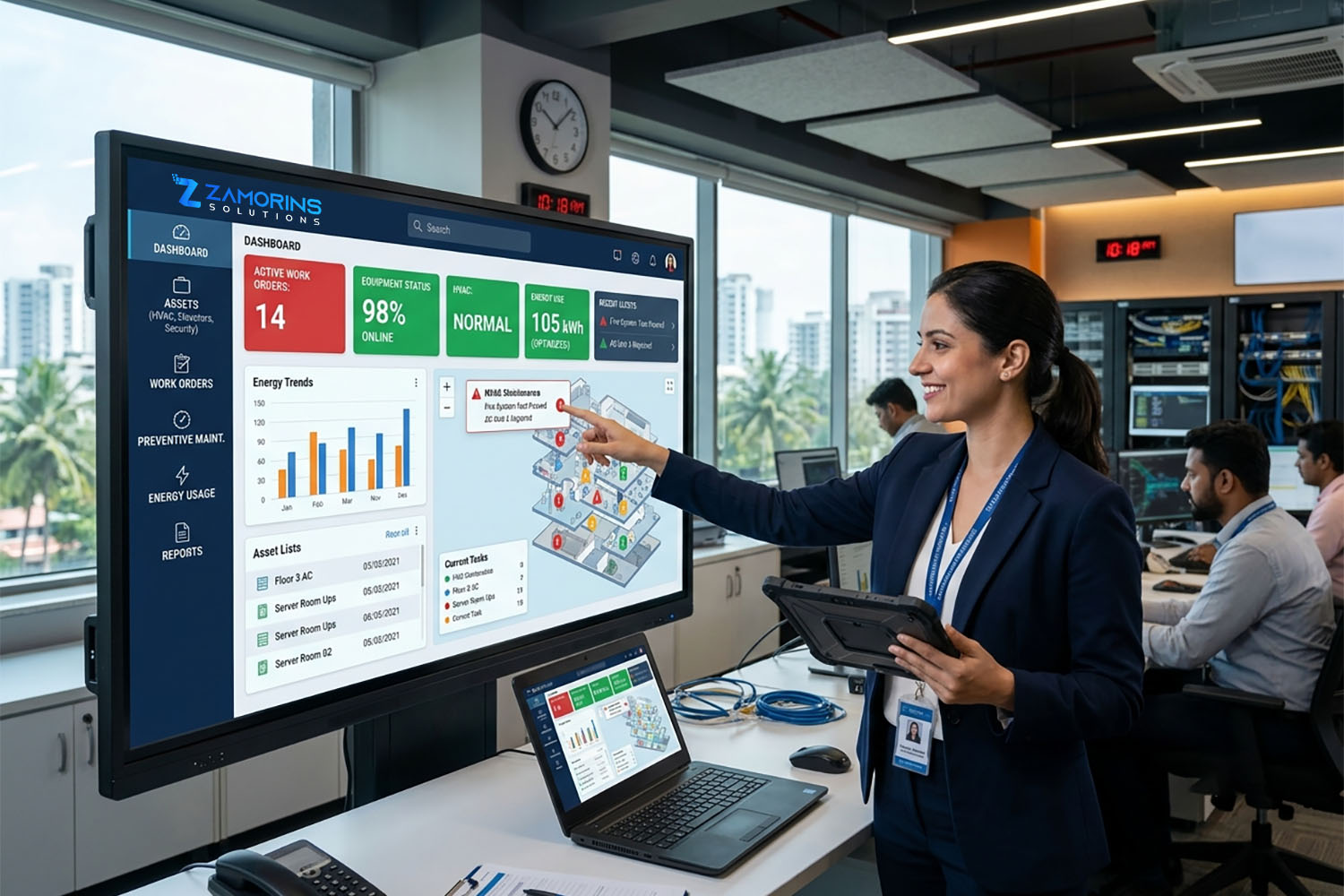
How Facility Management Software Improves Visibility Across Multi-Location Operations
Discover why multi-location businesses in India struggle with operational visibility and how facility management software…
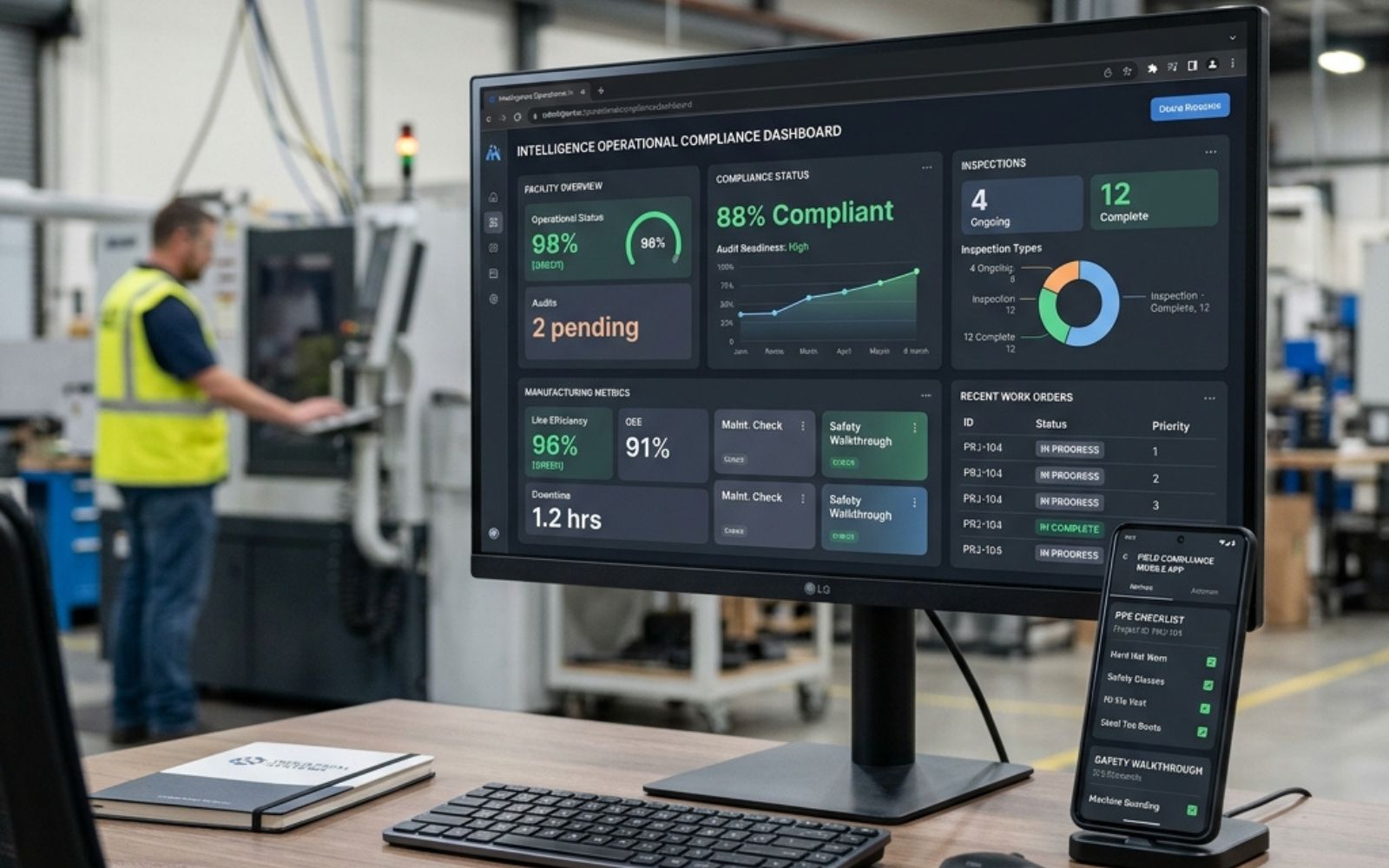
Why Compliance Breaks Before Audits, and How Visibility Fixes It
Audits don’t usually create problems. They reveal them. A missing inspection record. A delayed corrective…