
Similar to a storefront with a stuck door and flickering lights, a sluggish, shaky, or unstable website drives away customers before they’ve had a chance to see what’s inside. In 2025, Core Web Vitals will be crucial for user trust, conversions, and brand credibility in addition to being a Google ranking factor.
This guide, which is designed for startups, SMEs, local businesses, tech founders, and agencies aiming to increase their online presence, provides you with precise, doable steps to enhance the Core Web Vitals of your website.

What Are Core Web Vitals and Why Do They Matter in 2025?

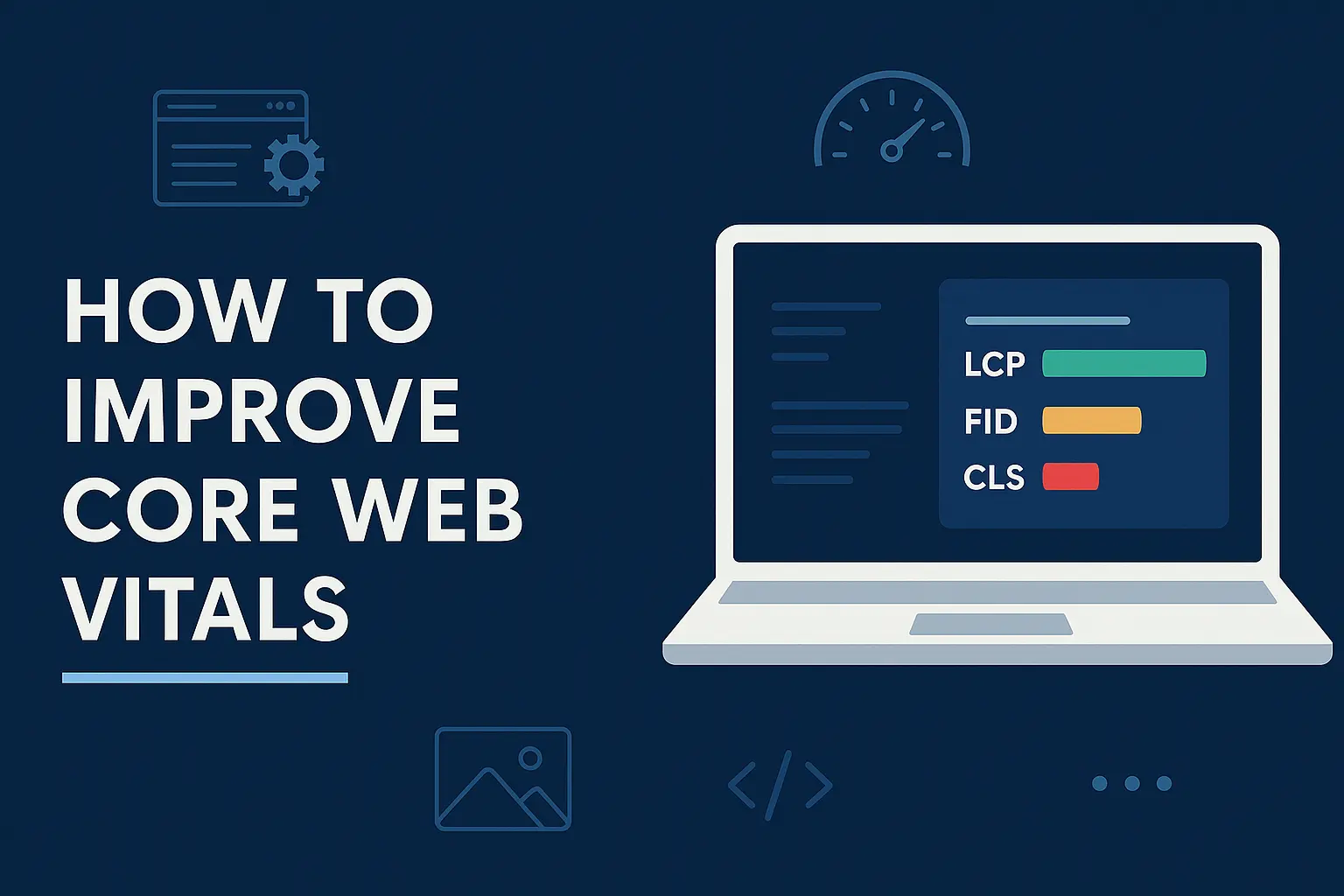
Google’s Core Web Vitals are three performance metrics that gauge how responsive, stable, and quick your website is for actual users:

  • The speed at which the primary content appears is known as the Largest Contentful Paint (LCP).
  • How quickly your website responds to taps and clicks is measured by the First Input Delay (FID) and Interaction to Next Paint (INP).
  • The stability of your layout during loading is measured by Cumulative Layout Shift (CLS).

Poor scores for businesses indicate:

  • Reduced Google rankings
  • Reduced conversions as a result of irate visitors
  • Credibility was lost in markets with competition.

For instance, a Google study indicated that lowering LCP from 4 seconds to less than 2.5 seconds can boost conversions for e-commerce websites by as much as 24%.

How to Measure Your Current Core Web Vitals Scores

Measure what’s broken before fixing it. Make use of these free resources:

  • Google PageSpeed Insights: Actual user data and suggestions for enhancement
  • Chrome DevTools’ Lighthouse is an in-browser performance test.
  • Search Console’s Core Web Vitals Report: Historical Data & Trends

Pro tip: Test on desktop and mobile devices. A website that runs smoothly on a desktop computer might not function well on a mobile device, particularly in places with poor bandwidth.

10 Web Design Improvements to Boost Core Web Vitals

Performance and design come together here. The action, justification, and impact are provided for each of the following tips.

Prioritize Above-the-Fold Content

  • Action: Load the first screen’s content before anything else.
  • Reason: Faster LCP, lower bounce rate.
  • Impact: Keeps visitors engaged from the first second.

  • Use Modern Image Formats (WebP/AVIF)

  • Action: Convert images to next-gen formats.
  • Reason: Reduces file size by up to 50% without quality loss.
  • Impact: Boosts speed without hurting design.

  • Implement Lazy Loading

  • Action: Load images/videos only when they appear in view.
  • Reason: Shortens initial load time.
  • Impact: Better LCP, happier mobile users.

  • Optimize Fonts and Avoid FOIT/FOUT

  • Action: Use system fonts or preload custom fonts.
  • Reason: Prevents layout shifts and flashing text.
  • Impact: Improves CLS score noticeably.

  • Minimize JavaScript Execution Time

  • Action: Split scripts and load only what’s needed for each page.
  • Reason: Shortens INP delays.
  • Impact: Faster interactions = better conversions.

  • Preload Critical Resources

  • Action: Add for important CSS, fonts, or hero images.
  • Reason: Reduces perceived load time.
  • Impact: Pages “feel” faster to users.

  • Use a Content Delivery Network (CDN)

  • Action: Deliver content from servers closer to your visitors.
  • Reason: Lower latency = faster loads globally.
  • Impact: Ideal for startups serving both Indian and US markets.

  • Avoid Intrusive Pop-Ups

  • Action: Delay pop-ups until after the first interaction.
  • Reason: Keeps CLS low and improves user trust.
  • Impact: Higher engagement rates.

  • Audit Hosting Performance

  • Action: Choose a host with fast server response times (<200ms).
  • Reason: Poor hosting drags down all Core Web Vitals.
  • Impact: Especially critical for e-commerce and SaaS sites.

  • Regularly Test After Design Updates

  • Action: Check Core Web Vitals after every new plugin, banner, or redesign.
  • Reason: Even small changes can hurt scores.
  • Impact: Prevents gradual performance decay.

  • Industry-Specific Examples

    • E-commerce: Reducing LCP improves cart completion.

    • Healthcare websites: Fast, stable pages help patients book appointments.

    • Hospitality: Mobile-friendly performance boosts booking conversions.
      Learn why web apps matter for growth

    Key Takeaways

    • Core Web Vitals directly affect SEO and sales.

    • Design and performance go hand in hand — one without the other is a missed opportunity.

    • Continuous monitoring is as important as the initial optimization.

    How often should I check my Core Web Vitals?

    At least once a month, and after every major site update.

    Will improving Core Web Vitals boost my Google ranking instantly?

    Not instantly, but over weeks as Google reprocesses your site data.

    Is Core Web Vitals important for small local businesses?

    Yes — faster, stable websites keep customers from bouncing to competitors.

    At Zamorins Solutions India, we help startups, SMEs, local businesses, and agencies build fast, beautiful, and conversion-ready websites that score high on Core Web Vitals.
    Book your free performance audit today and see where you can improve — before your competitors do.

    Related Posts