



A chiller breaks down on a humid Kerala afternoon. The factory floor stops. Your maintenance supervisor is on the phone with three vendors at once. A supervisor is filling out a paper breakdown report while the production manager demands answers. By the time the equipment is back online, you have lost hours of output, paid emergency service rates and written off a shift. Sound familiar?
This is reactive maintenance — fixing things after they fail — and it is the default mode for a surprising number of well-run Indian facilities. The problem is not that breakdowns happen. Equipment will always fail eventually. The problem is when every breakdown is a surprise, and when your entire maintenance operation is built around responding rather than preventing.
The True Cost of Reactive Maintenance
Most operations leaders think of reactive maintenance costs in terms of the repair itself — the spare part, the technician’s time, the vendor call-out fee. But the real cost is far wider than that.
- Unplanned downtime cascades through production schedules, dispatch timelines and customer commitments.
- Emergency procurement of spare parts is almost always more expensive than planned purchasing, especially for imported components.
- Overtime and disruption add to your wage bill and erode team morale.
- Secondary damage occurs when one failing component stresses adjacent equipment before the root failure is caught.
- Compliance exposure increases when equipment runs beyond safe operating parameters without detection.
When you add these costs together, a single unplanned breakdown can cost several times more than a scheduled maintenance activity that would have prevented it.
Why Indian Facilities Stay Stuck in Reactive Mode
Most operations leaders know that preventive maintenance is the right approach. So why do so many facilities continue firefighting?
Maintenance data lives in silos
Breakdown logs are in one register, service records are in another, warranty information is in someone’s email inbox and equipment manuals are in a filing cabinet that nobody has opened in two years. When data is scattered, it is almost impossible to spot patterns or plan proactively.
Spreadsheets cannot trigger action
Many maintenance teams do maintain some form of schedule — usually an Excel sheet with service due dates. But a spreadsheet cannot send an alert to a technician when a service is overdue. It cannot escalate to the operations head when a task is missed. It simply sits there, waiting for someone to open it and remember to check.
Field teams work with paper
When technicians carry paper job cards, completed work does not make its way back into any central system quickly or reliably. Managers cannot see what has been done, what is pending or what was flagged during an inspection unless they physically chase someone for the paperwork.
There is no visibility into asset health
Without a clear view of each asset’s maintenance history, usage hours and open issues, maintenance managers are forced to rely on gut feel. They often defer services to avoid disruption, which pushes assets closer to failure.
What a Planned Preventive Maintenance System Actually Looks Like
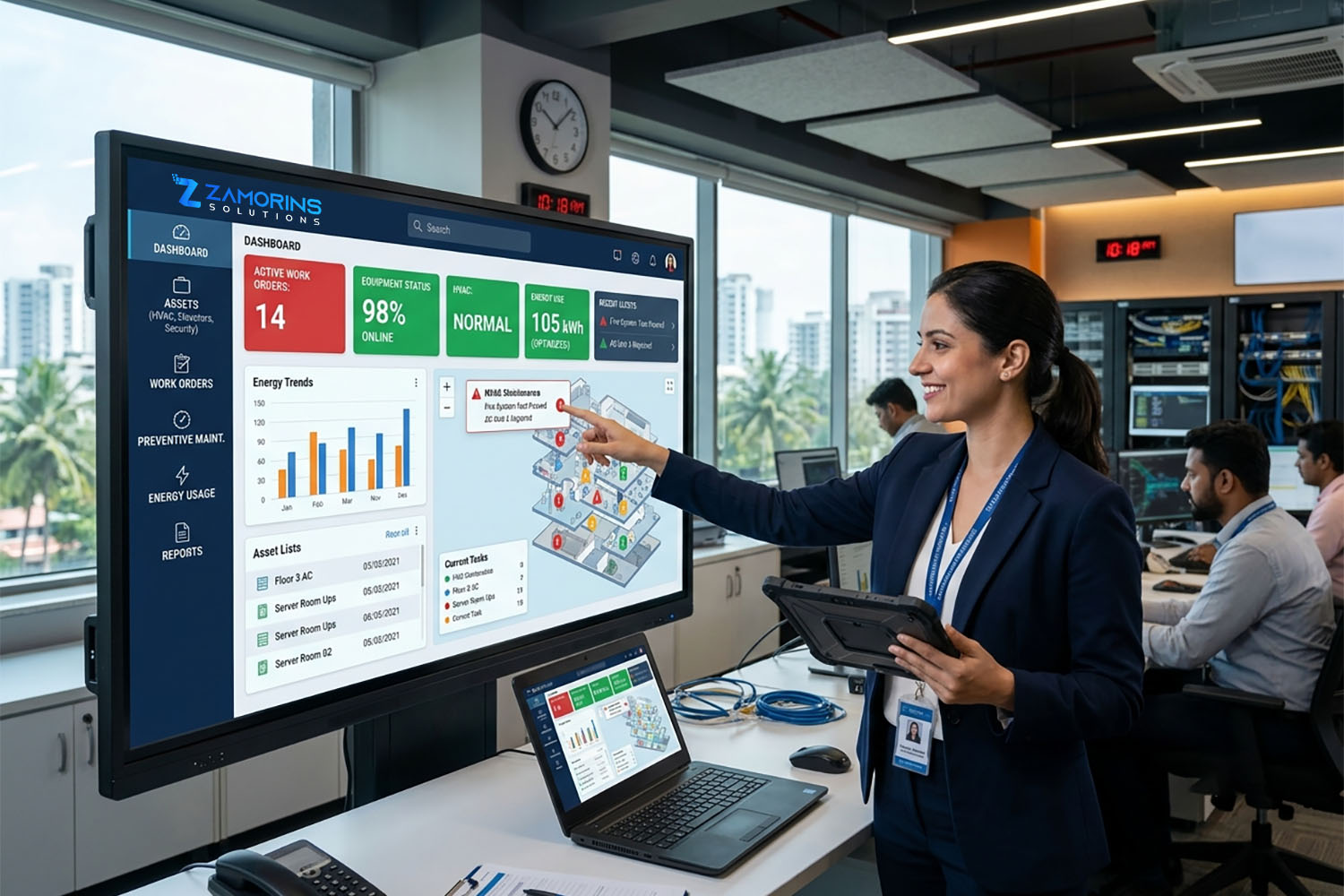
Shifting from reactive to preventive maintenance is not simply a matter of intent. It requires a system — a structured, digital workflow that connects asset records, schedules, field teams and management in one place.
A single register for every asset
Every piece of equipment — from a heavy generator to an air handling unit to a fire suppression panel — should have a digital asset record that captures its make, model, installation date, maintenance history, warranty status and open issues. This becomes the single source of truth for your maintenance operation.
Scheduled maintenance with automatic triggers
Preventive maintenance schedules should be defined against each asset — whether by calendar interval, running hours or a combination of both. The system should automatically generate work orders and assign them to technicians, without waiting for a manager to remember and create them manually.
Mobile-first field execution
Technicians should receive their assignments on a mobile device, complete guided checklists in the field, attach photographs of completed work and flag anomalies in real time. This eliminates paper job cards and ensures that maintenance records are accurate and up to date the moment work is completed.
Escalation and accountability built in
When a scheduled task is not completed on time, the system should escalate automatically. Operations heads should receive visibility into overdue tasks, recurring failures and pending work orders without having to request a report.
Inspection and compliance linked to maintenance
Many statutory inspections — electrical safety, fire equipment, pressure vessels, lifts — are tied directly to maintenance activities. A well-designed system connects inspection schedules with asset maintenance records so that compliance is a natural output of your operations, not a last-minute scramble before an audit.
The Shift From Cost Centre to Control Centre
When preventive maintenance is running well, the maintenance function stops being seen as a cost centre that reacts to problems and becomes a control centre that protects operational continuity. Managers can see at a glance which assets are due for service, which technicians are completing work on time, and which equipment is showing signs of stress before it fails.
This shift also changes how auditors and inspectors perceive your facility. When you can produce a complete, timestamped digital maintenance history for any asset on request, you demonstrate operational maturity. When you cannot — when records are scattered across registers and WhatsApp messages — you create doubt and risk.
Where to Begin
The good news is that you do not need to overhaul everything at once. Most facilities benefit from a phased approach.
- Audit your asset base. Create a complete inventory of critical equipment, even if it starts on a spreadsheet. Know what you have before you plan how to maintain it.
- Prioritise by criticality. Identify the assets whose failure would have the greatest impact on production, safety or compliance. These are the ones to bring into a planned maintenance programme first.
- Digitise your maintenance records. Move historical service records into a central system so that you have a baseline to work from. This is also when gaps in your maintenance history become visible.
- Implement scheduled work orders with mobile execution. Put your maintenance schedule into a system that assigns work, tracks completion and captures field data in real time.
- Review and refine. Use the data your system generates — completion rates, recurring failure patterns, mean time between failures — to improve your schedules over time.
How Zamorins Can Help
At Zamorins Solutions, we build operations software for Indian businesses that need more than off-the-shelf tools can offer. Our facility management and asset maintenance platforms are designed for the realities of Indian operations — multi-location facilities, mixed asset bases, field teams who work across shifts, and compliance obligations that vary by industry and location.
We build mobile-first systems that give technicians clear, guided workflows in the field and give operations heads real-time visibility across all their sites. Whether you need a standalone preventive maintenance module or a fully integrated facility management platform that covers work orders, inspections, compliance tracking and real-time dashboards, we can design and build it around the way your team actually works.
We do not sell a generic product and ask you to fit your operations around it. We build software that fits your operations — your asset types, your escalation hierarchy, your reporting needs and your compliance requirements.
Stop Managing Breakdowns. Start Preventing Them.
Reactive maintenance will always cost more — in money, in stress and in operational credibility — than a well-run preventive programme. The tools and systems to make the shift exist. The question is whether your current approach is holding your operations back.
If you are ready to move from firefighting to forward planning, we would be glad to talk through what the right system looks like for your facility or plant. Book a free consultation with the Zamorins team at https://zamorinstech.in/contact-us/ and let us help you build operations that stay ahead of failure.
Related Posts

Why Your Work Order Process Is Slowing Down Your Facility (And How to Fix It)
When work orders travel by WhatsApp message, paper slip or verbal instruction, delays and missed…

Predictive Maintenance Software to Reduce Downtime
Most Equipment Downtime Doesn’t Begin With Equipment Failure It begins with information failure. A technician…

How Real-Time Operations Software Dashboards Help Manufacturing Leaders Make Better Decisions
Better Decisions Don’t Start in the Boardroom. They start on the shop floor. A production…
How Facility Management Software Improves Visibility Across Multi-Location Operations
Discover why multi-location businesses in India struggle with operational visibility and how facility management software…