


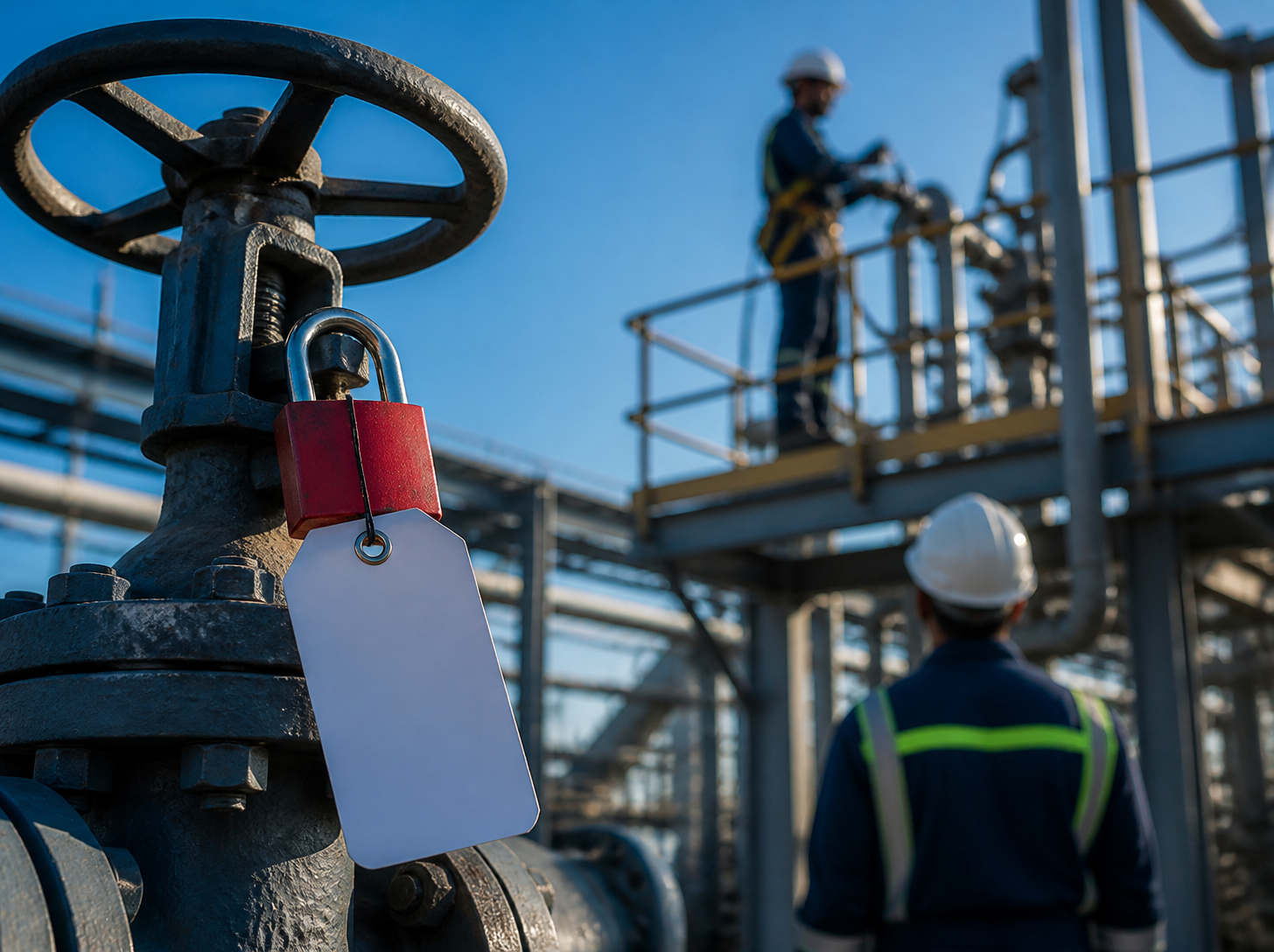
A contractor starts hot work on the third floor. The supervisor who signed the paper permit is on the ground floor. Nobody on site can confirm in real time whether the permit is still valid, whether fire watch is in place, or whether the isolation steps were actually completed. This is not a hypothetical. It is Tuesday morning at dozens of Indian facilities.
Permit-to-work is one of the most critical safety controls in any facility, plant or manufacturing environment. Yet most operations teams still run it on paper forms, WhatsApp photographs of signed sheets, or email chains that nobody can trace end to end. The result is a system that looks compliant on paper but falls apart the moment something goes wrong — or the moment an auditor walks in.
What a Permit-to-Work System Is Actually Supposed to Do
A permit-to-work (PTW) system is a formal, documented process that authorises specific people to carry out high-risk work — hot work, confined space entry, work at height, electrical isolation, excavation and similar activities — under controlled conditions. The permit records who requested the work, who authorised it, what hazards were identified, what controls are in place, and when work is closed out safely.
Done properly, PTW does three things simultaneously:
- It prevents incidents by forcing a structured risk assessment before work begins.
- It creates accountability by recording every decision and every signature.
- It provides an audit trail that proves your team followed procedure — before, during and after the work.
A paper form can technically achieve all three. In practice, it rarely does.
Where Paper-Based PTW Breaks Down
The problems with paper permits are not theoretical. Operations and safety managers across Indian facilities describe the same recurring failures.
Forms go missing or get damaged
Paper permits live on clipboards, in site offices, in supervisor pockets. They get wet, torn, misfiled or simply lost. When an auditor asks for permits from a specific date range, the search begins — and often ends with gaps the team cannot explain.
No real-time visibility
With paper, only the person holding the permit knows its status. The safety officer in the control room, the shift supervisor at the gate and the facility manager at headquarters have no way to see which permits are open, who is working where, or whether any are overdue for closure. Live oversight is impossible.
Incomplete sign-offs and skipped steps
When teams are rushed, paper checklists get partially filled. Isolations get marked as complete before they are verified. Signatures appear for people who were not physically present. Because nobody is watching the form in real time, these shortcuts go undetected until an incident or an audit exposes them.
No cross-permit conflict detection
Two contractors can unknowingly hold active permits for adjacent or interdependent work areas. On paper, there is no mechanism to flag that conflict. Digitally, the system can alert the authorising officer the moment a clash is detected.
Audit preparation is a manual scramble
When an external audit or statutory inspection is announced, the safety team spends days pulling physical files, photocopying records and trying to reconstruct closure trails. This is wasted effort — and it still leaves gaps.
What a Digital PTW System Changes
Moving permit-to-work to a purpose-built digital platform does not just speed up the paperwork. It fundamentally changes how your team controls and monitors high-risk work.
Structured, mobile-first workflows
Field supervisors and safety officers raise, review and authorise permits on a mobile device from anywhere on site. Every field — hazard identification, isolation confirmation, gas testing results, fire watch assignment — is mandatory before the system allows progression to the next step. Skipping steps becomes impossible, not just discouraged.
Real-time permit status across your facility
Operations managers and safety teams see a live dashboard showing every open permit: work type, location, authorising officer, time elapsed and scheduled closure. If a permit is approaching its validity window without being closed, the system sends an automatic alert. Nothing runs unsupervised.
Digital signatures with timestamps and location
Every sign-off is recorded with the user’s identity, the exact time and, where GPS is available, the physical location of the device. This creates an immutable record that cannot be backdated or altered. When an auditor asks who authorised the confined space entry on a specific date, the answer takes seconds.
Conflict and dependency checks
A digital system can be configured to check whether a new permit conflicts with existing active permits in the same zone, or whether required isolations are already held by another work order. This coordination step, which is simply impossible at scale on paper, prevents incidents caused by simultaneous or adjacent high-risk work.
Instant audit-ready reports
Every permit, every signature, every status change and every closure record is stored in the system. Generating a compliance report for a date range, a permit type, a contractor or a work area takes a few clicks. What used to take days of file searching takes minutes.
The Compliance Dimension Indian Facilities Cannot Ignore
Indian manufacturing, construction, oil and gas, healthcare and infrastructure facilities operate under a range of safety and labour regulations that require documented controls for hazardous work. Statutory inspectors and third-party auditors increasingly expect not just records, but demonstrable systems — evidence that your permit process is consistently followed, not just documented in a policy file.
When an incident occurs and an investigation follows, the first question is always: what controls were in place and can you prove they were followed? A digital PTW system answers that question in full. A paper system usually cannot.
Beyond regulatory risk, the reputational and financial consequences of a preventable site incident — contractor injury, fire, chemical exposure — are significant. For mid-size and growing Indian businesses, a single major incident can disrupt operations, damage client relationships and trigger prolonged legal and regulatory proceedings.
Choosing the Right Approach for Your Facility
Not every facility has the same PTW requirements. A multi-block industrial campus managing hundreds of concurrent contractor permits has very different needs from a single-site commercial facility with occasional maintenance work. This is why a one-size-fits-all off-the-shelf tool often disappoints.
The most effective digital PTW implementations are built around your specific work types, risk categories, approval hierarchies and reporting needs. Key questions to work through before selecting or building a system include:
- How many permit types do you currently manage, and how complex are their workflows?
- Who needs to authorise permits — and are they always on site, or sometimes remote?
- Do you need integration with your asset maintenance or work order system?
- What languages do your field teams and contractors work in?
- What does your existing audit reporting process look like, and what should it look like?
Answering these questions first prevents the common mistake of digitising a broken process rather than fixing it.
How Zamorins Approaches This Problem
At Zamorins Solutions, we build operations software for facility, plant and compliance teams across India. Our work in inspection, compliance and field operations has shown us that the businesses that struggle most with PTW are not those that lack awareness of the problem — they are those that have patched the problem with partial tools: a form builder here, a WhatsApp group there, a spreadsheet for tracking.
We help operations teams replace those patches with a coherent, mobile-first system built around their actual workflows. Whether that means a standalone digital PTW module or an integrated platform that connects permits, work orders, asset maintenance and compliance reporting, we design for the way your team actually works — in the field, under time pressure, often on a mobile connection.
The goal is not a beautiful dashboard. The goal is a system your safety officer trusts, your field supervisors actually use and your auditors cannot fault.
The Cost of Waiting
Every week that your permit-to-work process runs on paper is a week in which an unsigned isolation, a missed conflict or a lost form sits between your team and a preventable incident. The cost of building a proper digital system is predictable and one-time. The cost of a serious site incident — in human, operational and legal terms — is not.
If your facility is still managing permits on paper, the right time to change that was before your last audit. The next best time is now.
Book a free consultation with the Zamorins team at https://zamorinstech.in/contact-us/ to discuss how a digital permit-to-work system can be designed around your facility’s specific requirements.
Related Posts
Asset Lifecycle Management: Why Most Indian Facility Teams Are Flying Blind
When you cannot see the full history of an asset — its age, maintenance record,…

No Paper Trail, No Protection: Why Operations Teams Need a Digital Audit Trail
When an incident happens or an auditor arrives, your paper records are your first line…

Why Reactive Maintenance Is Draining Your Operations Budget — And How to Stop It
When equipment fails without warning, the cost goes far beyond the repair bill — it…

Why Your Work Order Process Is Slowing Down Your Facility (And How to Fix It)
When work orders travel by WhatsApp message, paper slip or verbal instruction, delays and missed…